
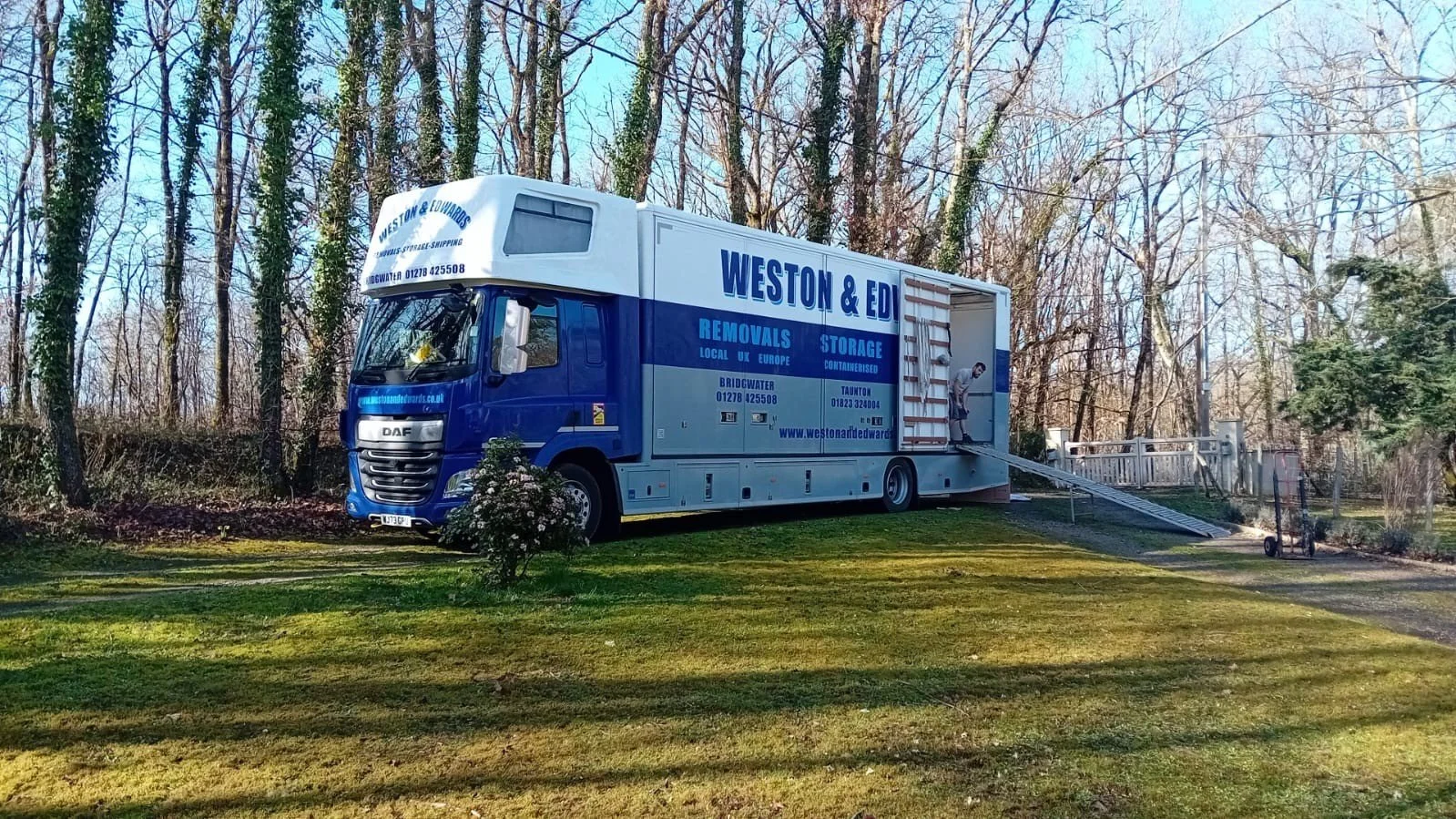
From the first quote to the move day and everything in-between, you are in control every step of the way. We will make your house move as smooth as possible.
You can have a dedicated truck for your move - we have trucks, vans, and trailers of all sizes to suit moves of any type. We can also offer a shuttle van for difficult access, where a large truck can’t get close to your property. We will accommodate your needs and schedule when organising your move and if you book at least 5 weeks in advance we can usually offer you a generous discount.
Whatever your situation, we’ll take care of the customs clearance. Whether it’s a TOR (Transfer Of Residence), second home or inherited goods.
The best bit? There’s no VAT to pay on trips from France to the UK, or from the UK to France!
The idea of moving to a beautiful country like France sounds lovely in principle but scary in reality, right? Or you’re looking to return to the UK? That’s where we come in!
We offer a range of services from part-loads to full house moves and all the packing and storage in-between. We can also move your cars and motorbikes too!

Our additional services…
How to Navigate French Customs when Moving
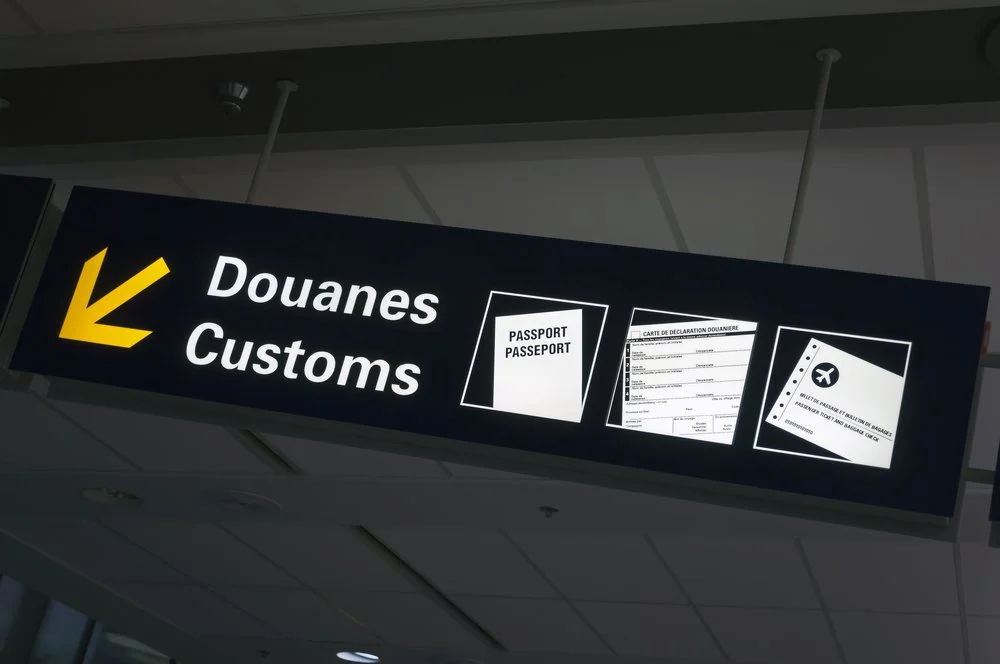
Moving is rarely straightforward - moving internationally can have even more challenges. If you’re moving to France you’ll need to know how to navigate French Customs and that’s where we can help! French customs regulations can take several days to get cleared, depending on details and goods. It’s a good idea to familiarise yourself with the process so there aren’t any hiccups along the way. Following our guidance, you can also get through without having to pay, or at least paying a reduced amount due to duty-free allowances.
Under new laws since Brexit, anyone moving from the UK to France has a personal allowance (franchise douanière) of €430 when arriving by plane or shit (not including ferries), or €300 when arriving by train or car (including ferries). You do not need to declare goods purchased if they do not add up to this amount or less per person.
This does not apply to commercial items, and will only cover what most people see as ‘gifts’ and souvenirs rather than household items. Be careful and make sure to declare items that don’t fall under duty-free allowance, and keep original receipts with you.
If you want your goods to be imported to France duty-free, three specific criteria need to be met:
You must own the goods for a minimum of 6 months, and they have to be destined for your new home rather than re-sale. This time frame increases to 12 months for a car or vehicle.
You are moving to France to take up primary residence,
Before the arrival of your belongings, you have lived outside France for the last 12 months.
Important things you need to have an understanding of (remember, all documentation needs to be filled out in French):
-
Different inventories will be used when moving to France and going through customs. Be careful not to confuse the valued inventory meant for customs for the one that is required for insurance. The insurance inventory will be more detailed and state all the replacement values of your belongings in the case of an insurance claim being made. The valued inventory for customs, on the other hand, is there to provide a summary of what you are shipping and their designated retail value
-
If you are the consignee documented on the shipping line’s Bill of Lading, you are going to need to provide a release order. This is so that someone else will carry out all the formalities on your behalf, and you can limit your involvement and stress in some way.
-
A non-cession certificate is a sworn statement that you give stating that the goods you are bringing into the country belong to you, and they are not intended for resale. At the top of the form, this needs to be included and completed:
Je soussigné (I, the undersigned) - your first and last names
Profession - your profession
Domicile - Your full French address.
At the bottom, you need to fill in:
Fait à (completed in) - The town you are in when completing the form.
Sign and date it before sending it.
-
You will need to provide a proof of residence when going through French import customs formalities, as well. Like in the UK, the quickest way to prove this is by showing a utility bill or even a purchase agreement or lease copy for something in your name at your new French address.
-
Anyone moving to France for any professional reason will need to attain a letter from their employer explaining that you are moving to the country for a particular job role. In this letter, it needs to be mentioned how long you have lived outside France, and that France is going to become your primary residence.
-
Anyone moving to France for non-professional reasons needs to get a change of residence certificate. Thuis can be acquired from the French consulate from wherever you are moving from, and will be needed for all nationalities (including French).
Without this, you are likely to end up paying duties and taxes on your belongings, and the importation process will become more confusing and complex.
-
This applies when shipping vehicvles. The original certificate of title for each vehicle will be required, as well as an invoice copy and proof of purchase that includes the name of the owner and the name of whose belongings are being shipped.
The certificates of title need to be originals, but other documentation can be copies that have been scanned in. Photographs as copies are not accepted by French authorities.
We appreciate that knowing about this doesn’t make actually doing it any easier - that’s where we can help! To make your life easier, we can handle everything from customs clearance and tax considerations to packing and storage.
Whether you choose to navigate French customs regulations yourself, or would prefer help from a trusted removals company such as ourselves - get in touch with us :)